
Ruth Kudzai
Three brands running on three separate back ends, on a platform she could not change. Now one system she owns and edits herself, running her programmes, memberships, courses and events from a single place.
Brief
The problemBring the different parts of the public brand together and make its content and enquiries easier to manage.
Approach
Strategy & designBuild the public experience around Ruth's A.I.M. method and connect it with the administration tools behind the work.
What was delivered
The workA brand website, podcast and book platform, A.I.M. programme pages, admin HQ, analytics, and an AI assistant working as one system.
THE SYSTEM, IN USE
One customer task, end to end.
Choosing a session, seeing exactly what it includes, and paying for it. Three screens from the live site, in the order a customer meets them.
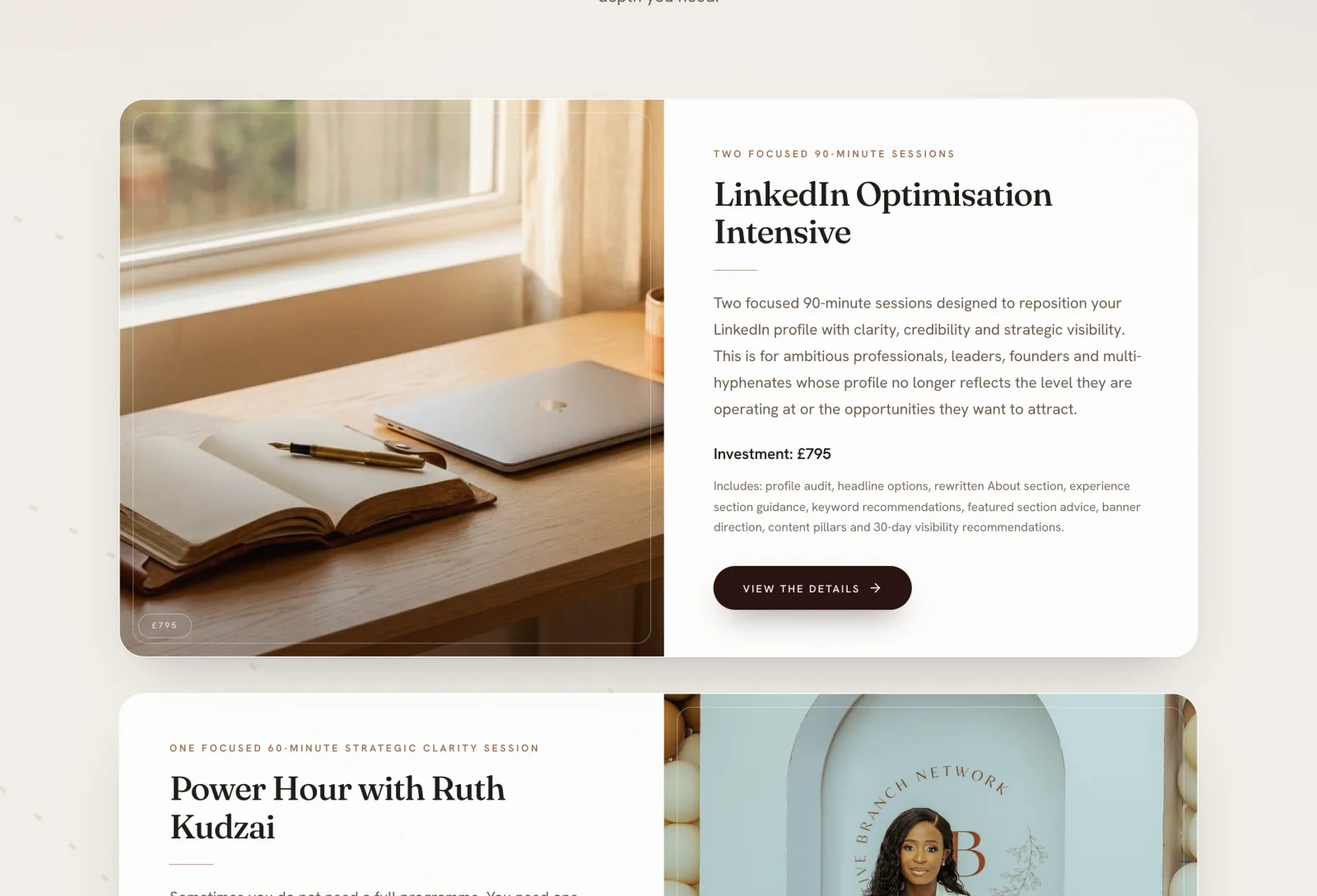
01 / ChooseBoth ways to work are on one page, each with its scope and its price. Nobody has to message to ask what it costs. 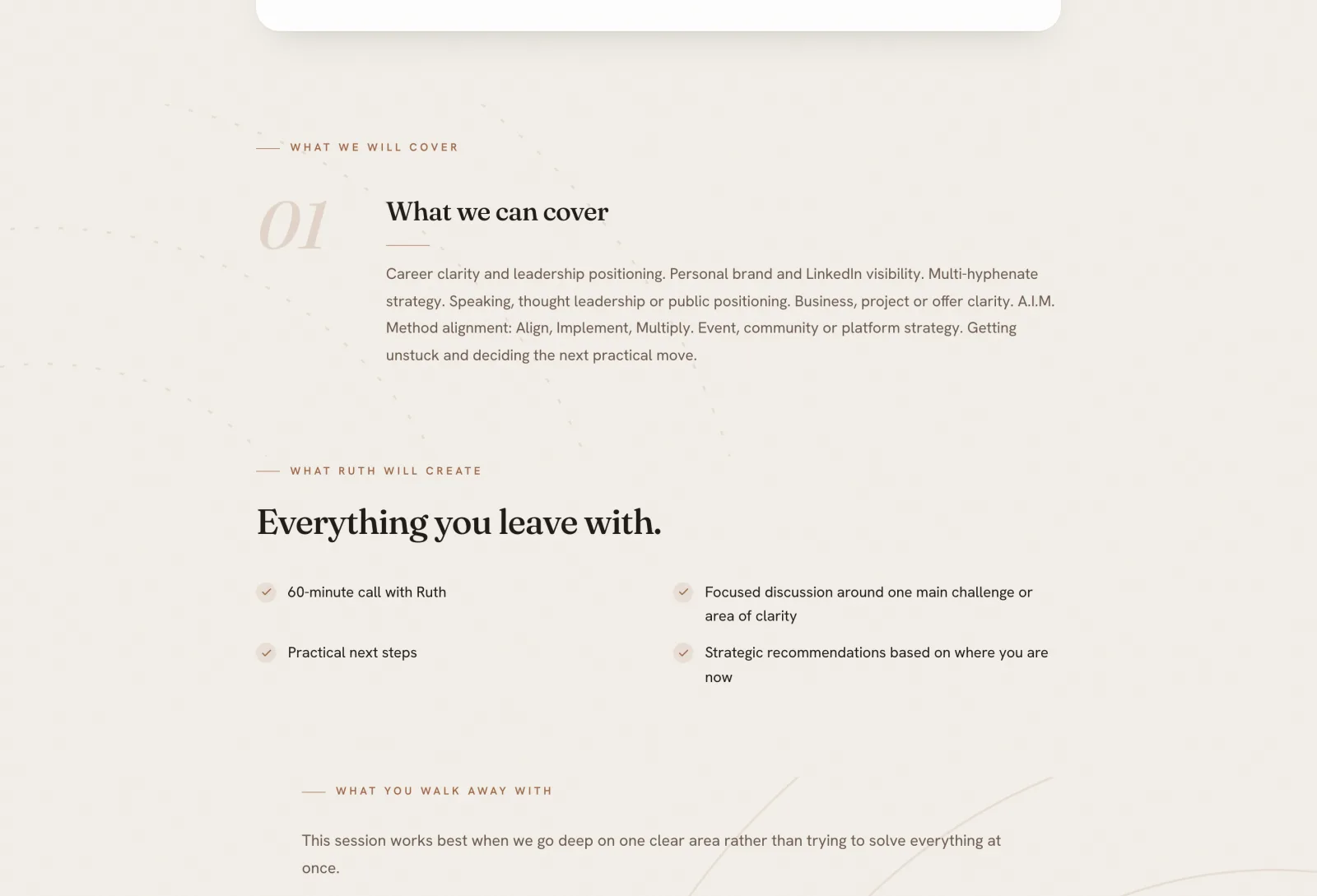
02 / UnderstandWhat the session covers and what you leave with, written down before you commit. This is the answer to the question that used to arrive by email. 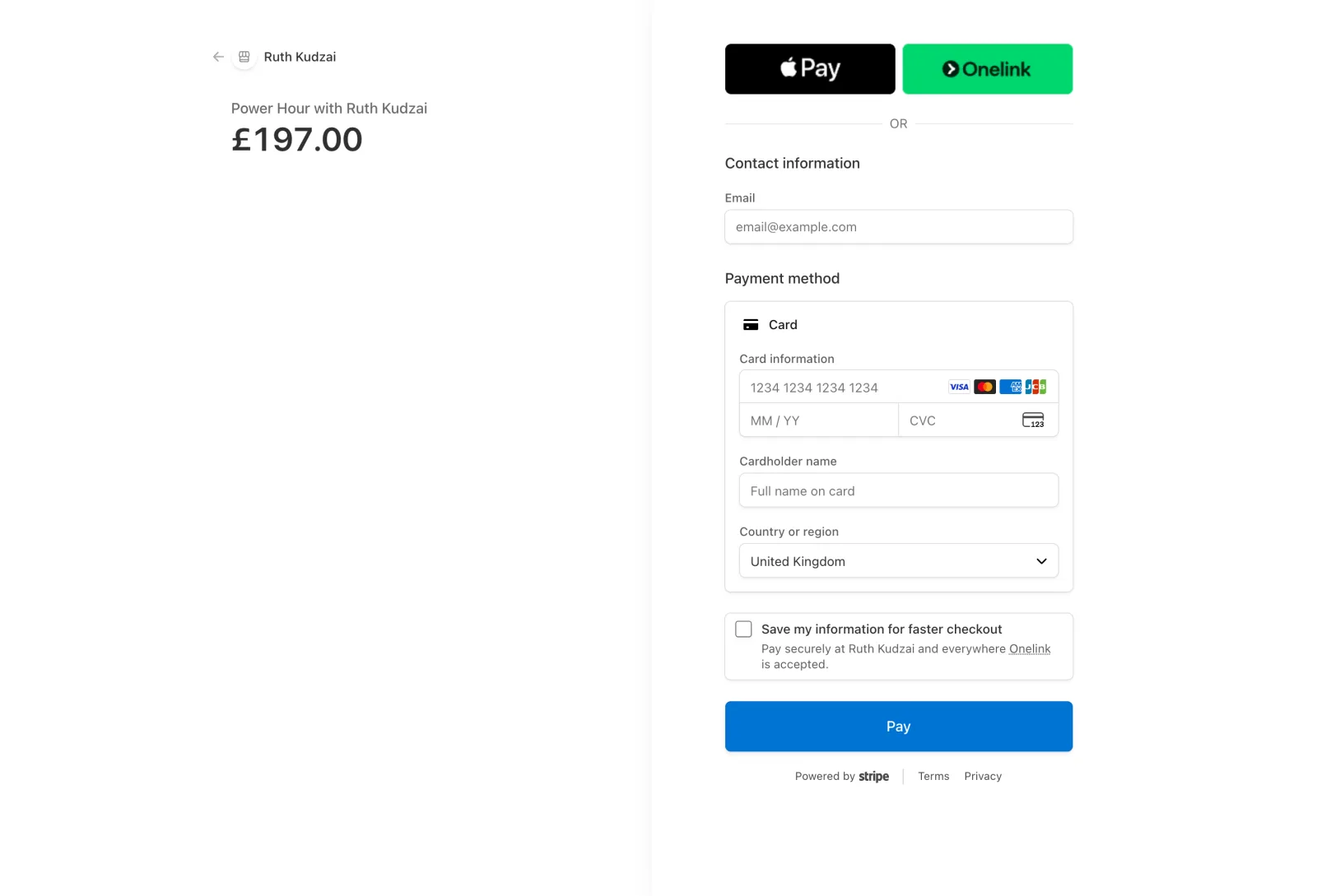
03 / PayCheckout is hosted by Stripe, so card details never touch the site. The booking is confirmed without Ruth being involved in the transaction.
- What it replaced
- Before this, each of those three steps was a message. What the offer was, what it included, and how to pay.
- What the owner still does
- Ruth still runs the sessions, sets the prices and writes the content. The system takes the enquiry, the explanation and the payment, not the work itself.
- Basis for this claim
- Delivered functionality, verifiable on the live site. This is not a claim about revenue or conversion, which are the client's own to report.
THE SYSTEM BEHIND THE BRAND
The same consideration, behind the scenes.
The brand does not stop at the public website. The tools behind it deserve the same care: how information is arranged, what needs attention, and how someone moves through their working day.
01 / One headquarters, three brandsThe three brands keep their own identities and sit in one place. Moving between them is a click, not another login. 02 / A workspace shaped around the brandStep into a brand and the navigation changes with it. This one is organised around the actual work: the week ahead, the podcast, the programmes, the book. The consultancy gets a pipeline instead, because that is what a consultancy does. 03 / Every event in one placeDrafts, upcoming and past events in one list, each with its own tickets, guest list and page. This is the running system, not a mock-up of one. 04 / An event, laid outThe room is drawn rather than described. Tables, capacity and price categories sit on one screen instead of in a spreadsheet only one person can read.
- Why it is shaped this way
- Shared navigation gives the group one home. Separate workspaces stop different jobs crowding each other. The hierarchy leads on decisions rather than listing the contents of a database. Those are design choices, not measured reductions in effort.
- What is not connected yet
- The seating screen is a planning interface, and says so on the screen: a standalone draft, with the connection to real ticket types still to come. It is not a live seat-to-ticket sales flow and is not shown as one.
- What has been removed
- Client names, lead records and every financial figure are blurred out of these screens, and the seating view is cropped to the tool itself. What is shown is the interface, not the business’s data.